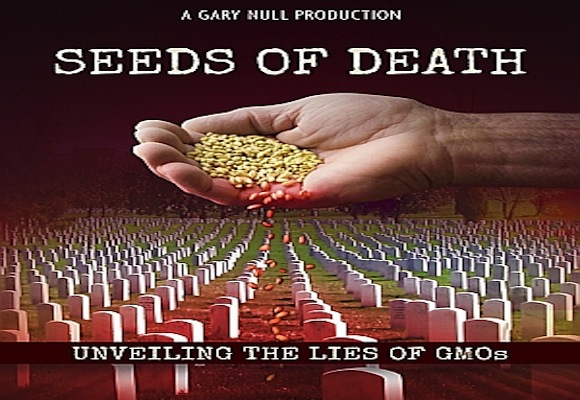

“Seeds of Death: Unveiling the Lies of GMOs” is a 2012 feature-length documentary directed and produced by Gary Null and Richard Polonetsky. Running approximately 90 minutes, it serves as a critical examination of genetically modified organisms (GMOs) in the food supply, positioning itself as an exposé on the health, environmental, and ethical risks associated with their widespread adoption. The film is narrated in a style typical of investigative documentaries, blending interviews, archival footage, and dramatic narration to argue against the safety and corporate control of GMOs.
Content and Themes
The documentary focuses on the alleged dangers of GMOs, claiming they pose severe public health threats, including links to cancer, infertility, birth defects, and organ damage. It accuses major agribusiness corporations like Monsanto (now part of Bayer), DuPont, and Syngenta of deception, corruption, and undue influence over governments and regulatory bodies to suppress labeling and safety data. Key segments explore:
- Health Impacts: Interviews suggest GMOs introduce toxins into the food chain, with animal studies showing tumor growth and sterility.
- Environmental Consequences: Sterile “Terminator” seeds are highlighted as a tool for corporate patenting of life, leading to biodiversity loss and farmer dependency.
- Corporate and Political Influence: The film alleges bribery, rigged studies, and media manipulation to promote GMOs as a “green revolution” solution to hunger, while ignoring long-term harms.
The narrative frames GMOs as a “death sentence” for ecosystems and human health, urging viewers to reject them through organic farming, labeling laws, and activism. It’s available for free streaming on platforms like YouTube and the Internet Archive.
Key Contributors
The film features a roster of experts and activists to bolster its arguments, including:
- Scientists and Physicians: Michael Antoniou (molecular biologist), T. Colin Campbell (nutrition expert from “The China Study”), and Mike Adams (natural health advocate).
- Other Voices: Attorneys, professors, politicians, and environmentalists like Joel Bakan (author of “The Corporation”) discuss legal and ethical issues.
Gary Null, a prominent alternative health filmmaker known for works on nutrition and conspiracy topics, drives the production. However, critics note his history with controversial views, such as AIDS denialism, which has led some to question the film’s objectivity.
Reception and Impact
“Seeds of Death” received mixed reviews and holds an IMDb user rating of 6.8/10, with praise for raising awareness on food transparency but criticism for sensationalism and factual inaccuracies. Supporters view it as a vital call to action, aligning with movements like the March Against Monsanto. Detractors, including skeptics on sites like RationalWiki, label it as anti-GMO propaganda that cherry-picks data and ignores scientific consensus on GMO safety from bodies like the National Academy of Sciences.
It won “Best Documentary” at the 2013 International Film Festival for Environment, Health, and Culture, and has influenced public discourse on labeling (e.g., contributing to Vermont’s 2014 GMO labeling law). As of 2025, it remains a touchstone in organic advocacy, though mainstream science largely deems GMOs safe when regulated properly.